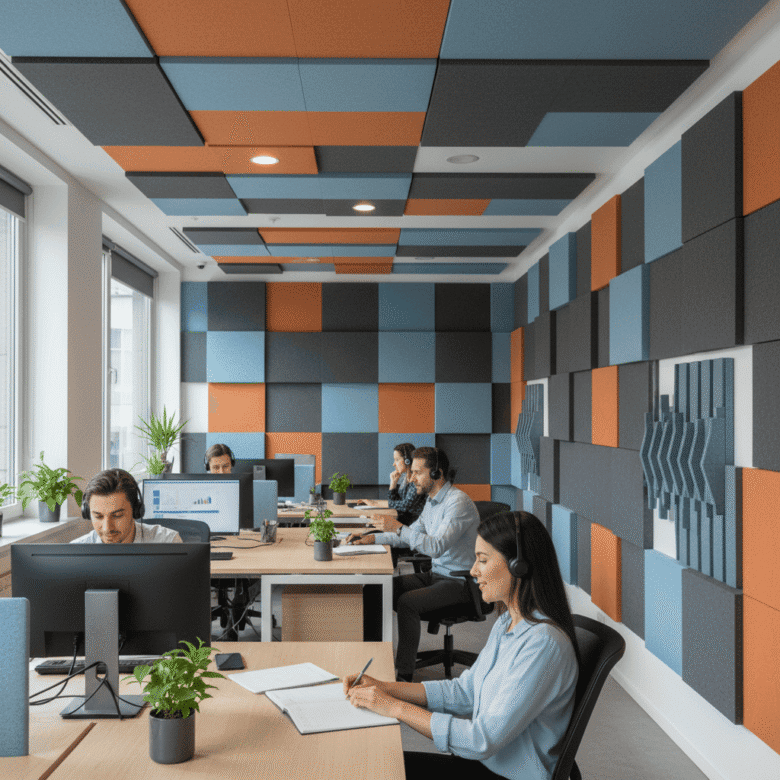
Open plan offices boost teamwork and flexibility but bring a tricky problem: constant background chatter, ringing phones, and nonstop interruptions kill the quiet time needed to focus deeply. This makes tough tasks harder to finish and pushes stress levels way up for employees. If you want to know how to tackle this chaos and get back those quiet moments that supercharge productivity, keep reading—you’ll discover surprising tricks that really work.
Sound panels are a practical tool that change the acoustic character of a workspace so people can concentrate with fewer interruptions. This article explains how acoustic treatment works in real world office settings and offers step by step guidance on selecting, locating and measuring panels for clear results.
How Sound Panels Improve Office Focus and Reduce Distractions
Sound panels work by absorbing mid to high frequency energy that would otherwise bounce around a room and create a noisy background. Reducing reverberation time leads to clearer speech intelligibility and fewer distracting echoes. In practical terms that means conversations stay local and do not spread across a large shared space.
When speech carries less, task switching declines and people can finish focused stretches of work more often. For knowledge work that relies on concentration this can translate to fewer errors and faster completion times for detailed tasks. The effect is most noticeable in open areas, meeting zones and near communal equipment like printers.
Scientific Principles Behind Acoustic Treatment and Concentration
Two measurable concepts matter here. One is reverberation time, often noted as RT60, which is the time it takes for a sound to decay by 60 dB. Many offices benefit when RT60 is reduced to a lower level so speech does not linger. A second concept is sound pressure level measured in decibels dB. A reduction of a few decibels can make speech less intrusive.
What levels to aim for
For open work areas a target RT60 in the range of 0.4 to 0.6 seconds is a reasonable guideline depending on ceiling height and room volume. For meeting rooms and quiet zones a shorter RT60 produces a clearer experience. Regarding sound pressure level, people commonly perceive a 10 dB reduction as about half as loud. Even a 3 dB drop is noticeable when it comes from stationary background noise.
Evidence from workplace studies
Research linking noise and cognitive performance shows that uncontrolled background noise increases mental fatigue and slows complex task completion. Reducing ambient noise reduces the number of interruptions that break concentration. The benefit is both direct in fewer audible distractions and indirect through reduced stress levels.
Types of Sound Panels and How to Choose for Office Layouts
Not all panels are the same. Choice depends on goals, budget and design constraints. Common forms include wall mounted panels, hanging baffles, ceiling clouds and freestanding screens. Each form targets different sound paths and can be combined for balanced coverage.
Materials vary too. Polyester fiber panels are lightweight and eco friendly. Mineral wool offers strong absorption at lower frequencies. Foam panels can be economical and work well for mid to high range control. Fabric wrapped panels provide a finished look for visible wall installations.
When comparing products consider the absorption coefficient values across frequencies so you address the bands where speech energy is strongest. Look at the size and placement options. Large panels or multiple smaller units distributed across surfaces usually perform better than a single small panel.
For practical product research this article provides useful examples and specifications for workplace panels akupanel
Design Tips for Integrating Acoustic Panels Without Sacrificing Style
Acoustic treatment does not have to look utilitarian. Simple approaches produce good results while keeping a clean aesthetic. Consider these design tips
- Mix textures and colors that fit the brand palette so panels double as visual art
- Use ceiling clouds above workstations to target vertical reflections while leaving wall art intact
- Place freestanding panels between clusters of desks to create semi private areas without permanent partitions
- Combine wall panels with soft furnishings and plants to create layered absorption
Spacing matters. Panels directly opposite each other reduce the strongest reflections. For larger rooms stagger panels across the length of the space to break up sound paths. If lighting or HVAC routing is a concern, choose thin profile panels designed for suspended mounting.
Measuring Results and Tracking Focus Gains After Installation
To confirm that sound panels are helping, set up simple before and after measurements and behavioral observations. Start with a baseline
- Record RT60 and ambient dB levels at multiple points during typical work hours
- Note times and frequency of audible interruptions that force people to stop work
- Survey staff about perceived noise and concentration levels
After installing treatment repeat those same measurements. Expect to see shorter RT60 values and a drop in average dB at key listening positions. Qualitative improvements often show up in staff feedback as fewer complaints about chatter and improved ability to hold phone or video calls without background noise.
Cost Considerations and Return on Investment for Office Sound Treatment
Sound panels range from economical to premium. Budget options can reduce reverberation in small areas for modest cost. Higher end panels with superior low frequency control cost more but handle a wider range of noise. Consider total cost including installation hardware and any modifications to ceilings.
Return on investment is not only monetary. While hard to pin down exactly, benefits include higher task completion rates, improved meeting quality and reduced staff stress. For organizations with concentrated knowledge work the decrease in interruptions often pays back over time through improved throughput and fewer mistakes.
Installation Steps and Maintenance for Long Term Performance
Follow a simple process for reliable results. First identify problem areas with quick sound checks and staff input. Next choose panel types that match the acoustic targets described earlier. Third plan a layout that covers direct reflection paths and distributes absorption.
Installation checklist
- Measure ceiling height and room volume to estimate RT60 impact
- Select mounting hardware compatible with ceiling type and wall construction
- Place test panels in a few positions to evaluate real world effect before committing to full coverage
Maintenance tips
Most panels are low maintenance. Fabric wrapped designs can be lightly vacuumed or spot cleaned. Polyester panels resist moisture and retain performance over time. Check for sagging or loose fastening after any ceiling work or HVAC service and resecure as needed.
Practical Examples and Small Scale Strategies for Immediate Gains
Small changes can produce noticeable improvements quickly. If you have a communal printer zone try adding a narrow freestanding screen to block direct line of sight and sound to adjacent desks. For meeting booths a ceiling cloud plus wall panel behind the speaker reduces return echoes and improves call clarity. In open plan areas cluster desks into pods and use hanging baffles above each pod to create quieter micro environments.
For temporary needs portable acoustic screens work well during short projects or when teams need concentrated time. They can be moved and stacked as priorities change without major remodel work.
Reducing noise is a practical path to more reliable focus and a calmer workday. Sound panels change the way sound behaves in a room and fewer airborne distractions mean people keep attention on important tasks for longer stretches. Start with a simple assessment and trial placement to see quick feedback before widening coverage. If you want technical examples and product details consult the linked resource for further reading and product comparisons
In conclusion the right acoustic treatment improves the working environment in ways that matter daily. Sound panels reduce reverberation, localize conversations and lower background levels which helps staff concentrate. Measurements such as RT60 and dB combined with staff feedback tell a clear story about what is working. Begin with a focused pilot in the noisiest area, collect baseline data and then expand coverage where results show the greatest return. Consider aesthetics as part of the plan so treatment blends with the workspace identity. If you manage a workplace, schedule a short acoustic review this month to identify quick wins. A small investment in panels and a clear installation plan often leads to measurable improvements in quiet time and fewer interruptions. Take action now and test a pilot solution in one high traffic area to see how much difference controlled sound makes to daily focus and team wellbeing.