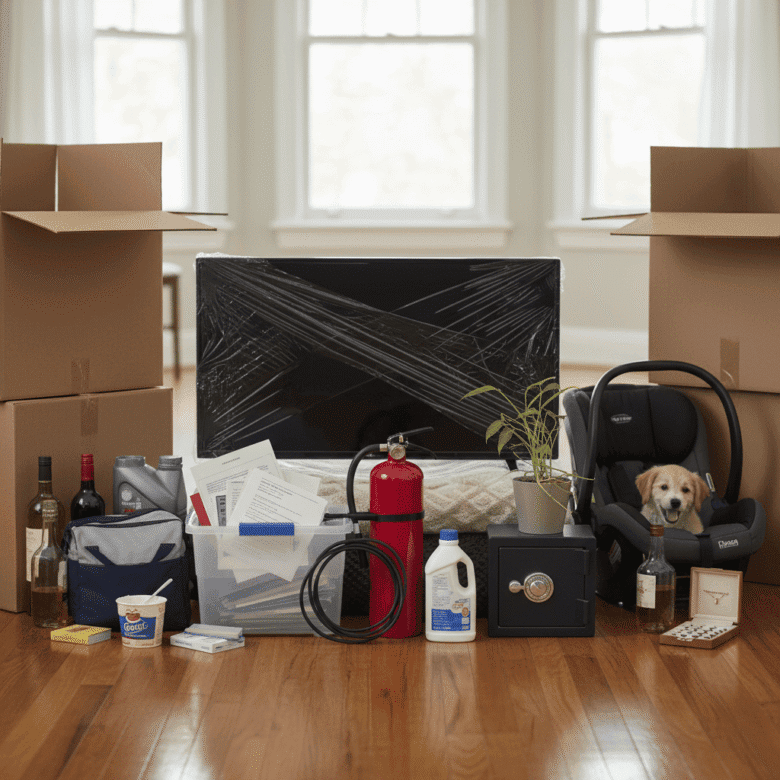
Moving day can feel like a race against the clock. Boxes pile up, decisions stack up, and it is tempting to let the crew pack everything to save time. That choice can lead to stress or losses when certain items are mishandled or misplaced. Knowing which items movers should not pack helps protect your most important belongings and keeps the day running smoothly.
This article highlights common and less obvious items to pack yourself. You will find practical tips for packing small valuables, health related items, plants, and hazardous materials. Follow these guidelines to reduce risk and to make unpacking easier at your destination.
Why some items movers should not pack
Movers are trained to move heavy furniture and boxes efficiently. They work under time pressure and must follow insurance rules. Some items carry special legal, safety, or sentimental considerations that make self packing the better choice. Other items need temperature control or careful placement that only you can provide.
When you pack certain items yourself you are in control of labeling and placement. That reduces the chance of accidental damage and missing pieces. It also makes claims and documentation simpler if an item is lost or damaged during transport.
Important documents and personal records to keep with you
Paperwork often gets overlooked when a home is emptied. Movers typically will not pack or claim responsibility for documents that are irreplaceable. Pack these items yourself and carry them in a personal bag.
- Passports and birth certificates
- Social security and tax documents
- Medical records and vaccination papers
- Property deeds and closing statements when selling or buying
- Vehicle titles and registration
Use plastic sleeves or a small accordion folder to group documents. Label them but do not write sensitive information on the outside of the folder. Keep this folder with you on moving day rather than packing it into a truck.
Medications and health related supplies
Medications are time sensitive and often require specific temperatures. Movers will not manage dosing schedules or refrigeration for prescription drugs. Pack all prescription and essential over the counter medicines in a clearly marked bag that you carry yourself.
- Daily prescriptions and inhalers
- Diabetic supplies and syringes
- First aid kit and emergency medication
- Mobility devices and spare batteries
For long moves check with your pharmacist about travel storage suggestions. Keep a small supply of medicines on hand in case unpacking takes longer than planned.
Valuables and irreplaceable keepsakes
Jewelry, family heirlooms, original art, and one of a kind items have value that sometimes exceeds what policies will cover. Movers may treat valuable items as normal cargo. Packing them yourself reduces handling and gives you the option to transport them personally.
- Fine jewelry in a padded case
- Collectible coins and rare stamps with documentation
- Original art pieces and photography negatives
- Heirloom furniture parts or small antiques
Take photographs of each item and store receipts or appraisals with the photographs. If you prefer to have movers take certain valuable boxes, mark them clearly and talk with the moving company about declared value coverage. Otherwise carry the most precious items in your personal vehicle.
Hazardous materials and household chemicals
There are strict rules about transporting hazardous materials. Movers will refuse to pack items that present a fire or health risk. Packing these items yourself prevents surprises during loading and avoids safety issues during transit.
Common items that cannot go on a moving truck
- Propane and gas cylinders
- Aerosol cans and paint thinners
- Pool chemicals and pesticides
- Bleach and certain cleaning solutions
- Compressed gas canisters like oxygen without prior arrangements
Safe handling tips
Start by checking labels for storage and disposal guidance. Use the local hazardous waste center for items you cannot move legally. When in doubt separate these products into a clearly marked bin and do not leave them where the crew might mistakenly load them. For moving day create a short list that you hand to the foreperson so they know which items require special handling or removal.
Perishables plants and pet supplies
Food and live plants need special attention. Movers typically will not transport foods that can spoil or plants that require delicate handling. Packing these yourself helps avoid waste and prevents damage to other household items from leaks or soil.
- Refrigerated items and frozen goods
- Open canned foods and liquids that could spill
- Potted plants and delicate cuttings
- Specialty pet foods or medications
For short local moves pack a small cooler with meals and snacks for the first 24 to 48 hours. For longer moves plan to transport perishable groceries in your own vehicle. For plants check local regulations especially across state lines and consider giving fragile specimens to friends if the climate during transit will be harsh.
Electronics and data devices
Electronics are heavy but fragile. Movers will handle boxes of electronics but they may not unpack or set them up. Packing them yourself protects connectors and disks and keeps passwords and backups accessible.
- Laptops and desktop computers with external drives
- Gaming consoles and media centers
- External hard drives and backup tapes
- Routers and smart home hubs
Battery and power related tips
Remove batteries from small devices to prevent corrosion or accidental power on. For larger batteries like those in power tools follow manufacturer guidance about storage. Label each box with the device and a note on where power cords are kept so setup at the new home is faster.
Packing strategy and the final checklist
Start with a short packing sequence and keep a running checklist. Label boxes with room names and a brief contents list. For the items movers should not pack create a separate pile by the door so you can transport those boxes in your personal vehicle. When possible pack an essentials box to carry with you that contains toiletries, a change of clothes, phone chargers, and basic tools for setting up beds and electronics.
Talk with the moving company ahead of time about their policies and ask for a written list of restricted items. A brief conversation avoids confusion on moving day. If you hire a local firm mention your personal pile so loaders know not to load those boxes. For local moves a well organized personal moving bag reduces stress for the first 24 hours at a new home.
When choosing a mover check reviews and what their insurance covers for high value items. If you work with Mountain Movers make sure you understand any limits on coverage and what they will accept for transport. Doing a clear inventory list the day before the move will speed claims handling if an incident occurs.
Practical examples and common mistakes to avoid
Example one is a homeowner who packed all jewelry in a kitchen drawer and left the drawer to movers. The drawer contents were separated and some small pieces went missing during loading. The better approach is to pack jewelry in a small lockable box and carry it personally.
Example two is a family that assumed movers would transport a large bag of garden fertilizer. The product spilled and stained carpeted boxes during transit. In this case the family should have disposed of hazardous garden chemicals before the move or transported them separately in a vehicle suited to contain leaks.
Common mistakes include labeling fragile boxes without listing the specific contents, assuming the moving crew will unpack boxes with electronics, and not keeping a photo record of expensive items before the move. Small steps such as packing a tech box and taking photos can save hours later on.
Moving requires planning and practical choices. Pack items you cannot replace or that present safety concerns. Keep medicines and vital documents with you. Protect heirlooms and electronics by using appropriate padding and clear labels. Use simple lists and a personal essentials bag to reduce stress during the first day in a new place.
Ready to get organized for moving day Make a list now of the items you will carry yourself and set aside one hour per evening to pack them. If you need local moving options and clarity on restricted items contact a reputable moving service for policy details and estimated costs. A phone call or email can clear up what the crew will and will not handle so you can focus on the items that matter most to you.
When you take these precautions you reduce loss and save time during unpacking. Start your checklist today and pack the items on this list yourself. If questions come up during planning consult your moving company before the big day and keep copies of important documents in a secure place. Taking control of the most sensitive items is the simplest way to protect them while still letting professionals handle heavy furniture and bulk transport. For help with logistics and to learn more about what a local team can and cannot move visit Mountain Movers.